For owners who work in Austin
Tax Advisor Austin across a shared screen
The work with owners in the city is a video call, shared books, and a close on a set day.
Book a call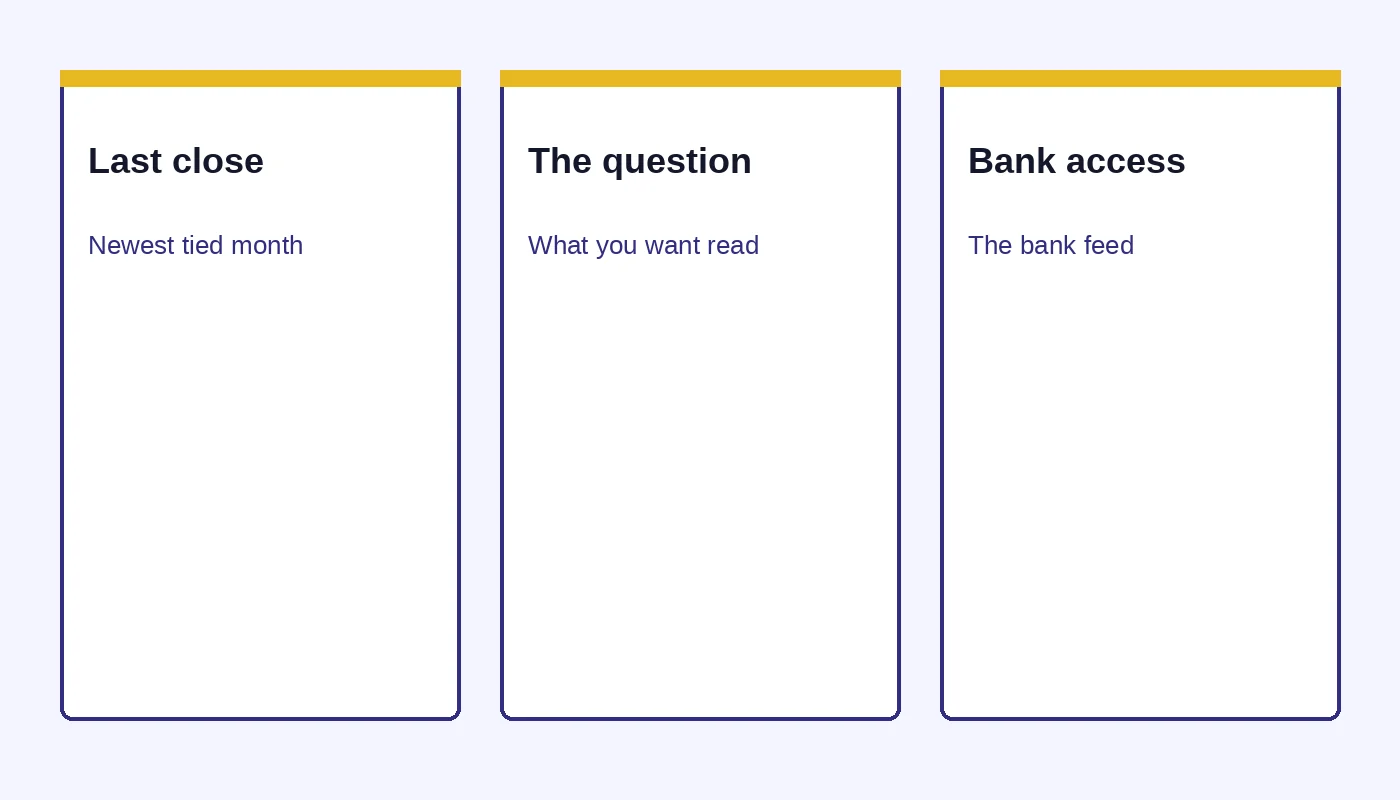
For owners who work in Austin
The work with owners in the city is a video call, shared books, and a close on a set day.
Book a callFor an owner in Austin who does not want another office to drive to, the work is a screen and a set of books we can both see. The call is the meeting. Both sides look at the same month, name what is still open, and pick the day that month will close. The drive between the two cities never enters that meeting. The books are already on the screen, the questions are already written, and the close still lands on the date both sides already picked.
You send access to the bank and to the file. We read the newest month that already ties, then the one after it. Questions go on the call, not into a pile of email. If a week has already closed, we say so, and we name the next week that can still move.
The useful stack is short. The last close, if there was one. The question you actually have. Access, not a box of paper. If no month here has ever been closed, put that in the first line of the note. We would rather start from an honest gap than from a month that only looks finished.
The packet a lender asked for stays on the shelf until one month and the bank describe the same deposits. Walking into the first call with a lender packet does not close a month the bank still disputes.
We spend the call on the newest month that already ties, and on whether a smaller cleanup would do more than a long engagement. Sometimes the honest answer is that a smaller cleanup would do, or that you do not need us yet. That is a complete answer.
Nothing is engaged until a written scope, with the price on it, has both signatures. Until then you can leave, and the records you showed us stay yours.
The useful part of the call is a month that already agrees with the bank, sitting where both of us can point at the same line. We start at the newest month that ties. Uncleared checks get a name. A transfer from the owner gets pulled out of sales. A deposit that is a loan draw is not left looking like a customer paid.
If the feed has been quiet for a while, we say how many months are open before we talk about the year. Advice on top of an open month would only be a guess, and the call is too short to waste on a guess. You leave with the next week named, or with a clear statement that the books are already current and the return is the only open job. If a letter is already on the counter, bring the date it names. Bring the letter itself to the call, because a retelling drops the date and the ask.
Nothing about the distance changes that order. A video call from a kitchen after the commute is the same close as a call from a quiet morning. The date we agree is the date the month lands, and the bank is the thing that has to agree with it.
Say which month last closed. The call can start there.

You will be talking to the Steven Palmieri practice. The practice is in Dallas.